🧭 Quick Start
This walkthrough takes a web instance from the first visit to a working mock response. It takes about five minutes.
1. Create the account
The first visit shows the registration form. Pick a username and a password and you are signed in right away. See Authentication if you need the details.
2. Create your first project
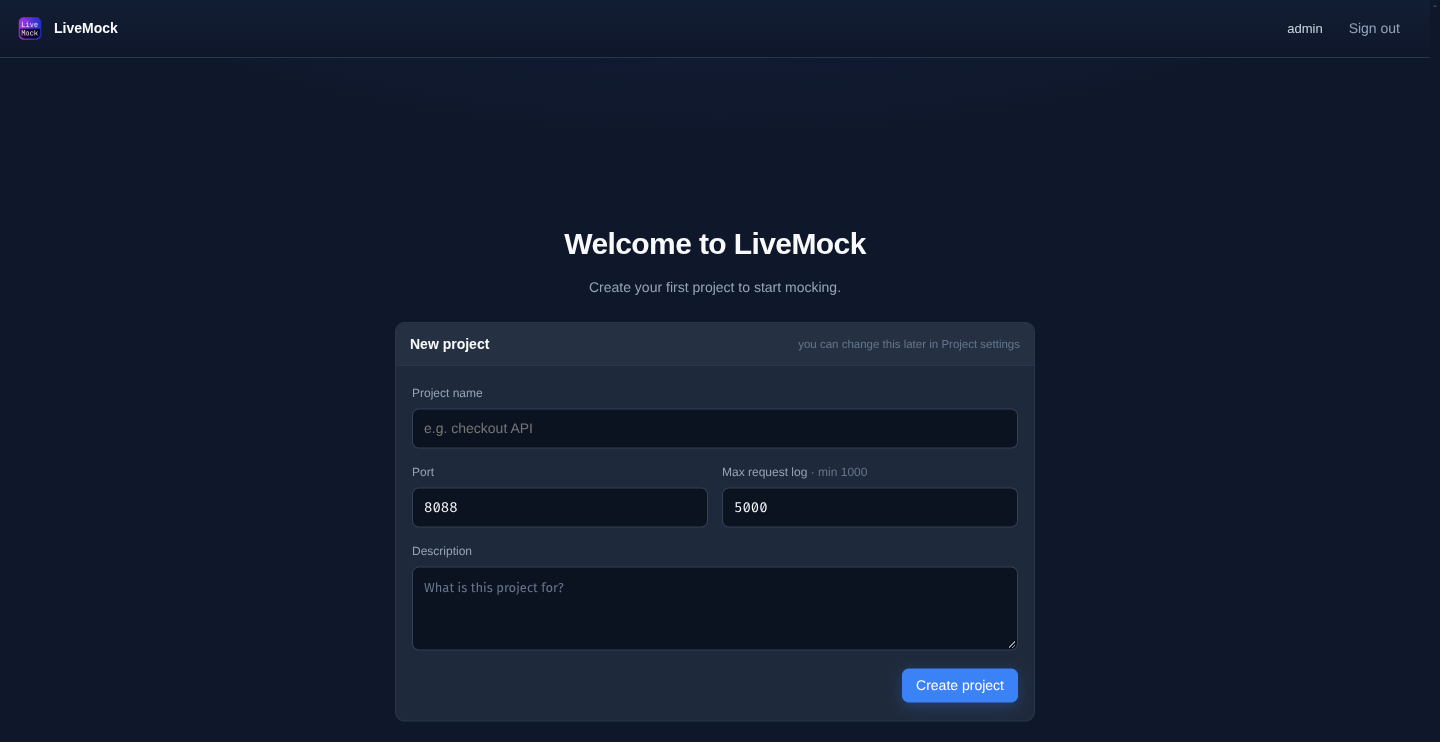
A project is one mock server with its own port and its own list of expectations. Enter a name, leave the port at
8088 (or pick another free port) and, optionally, set Max request log - how many requests the project keeps.
You land on the Expectation page of the new project. The project is stopped at this point; the app bar shows
stopped :8088.
3. Create an expectation
Click Add Expectation in the left panel. Give it a name, an optional description and, if you like, a group.
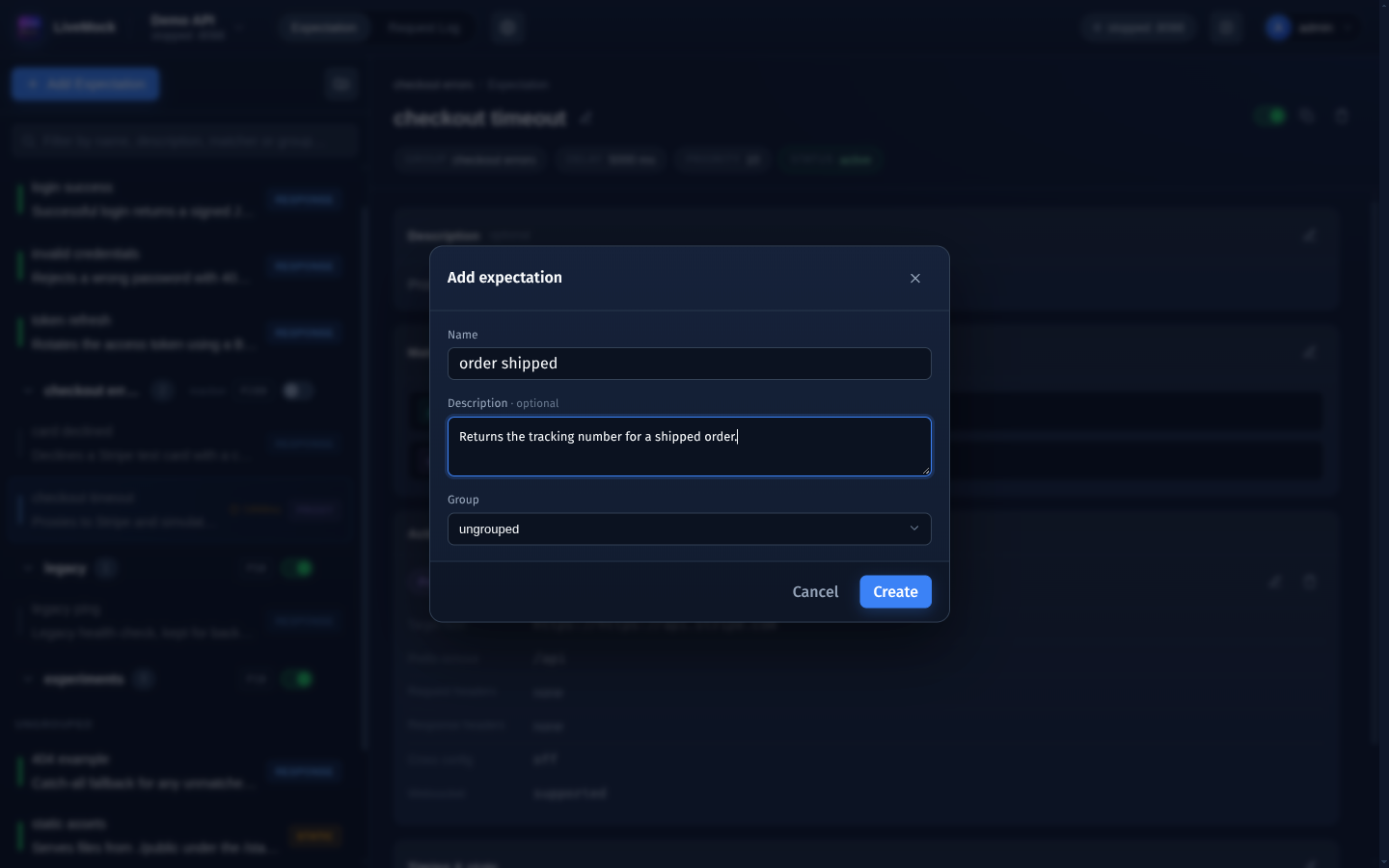
The expectation is created with no matchers and no action, and it is selected on the right.
4. Add a matcher
Click the pencil on the Matchers card, then Add matcher. A matcher has three parts: a type (method, path,
header, query, param), a comparator (is, starts with, contains, …) and a value.
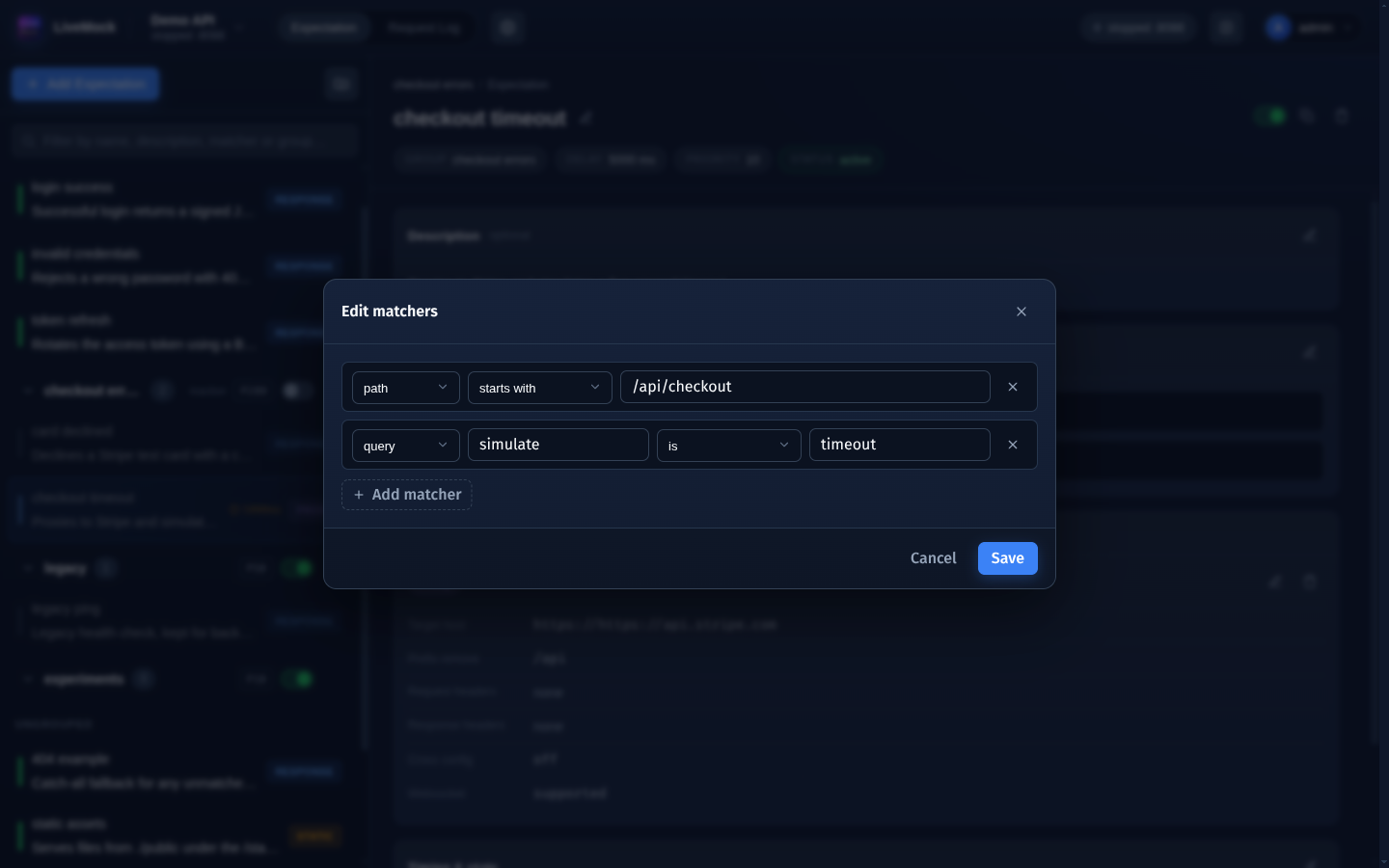
To match every request of the project, a single path matcher with starts with and the value / is enough. To try it
on a login endpoint, use method is POST plus path is /api/login.
5. Create the action
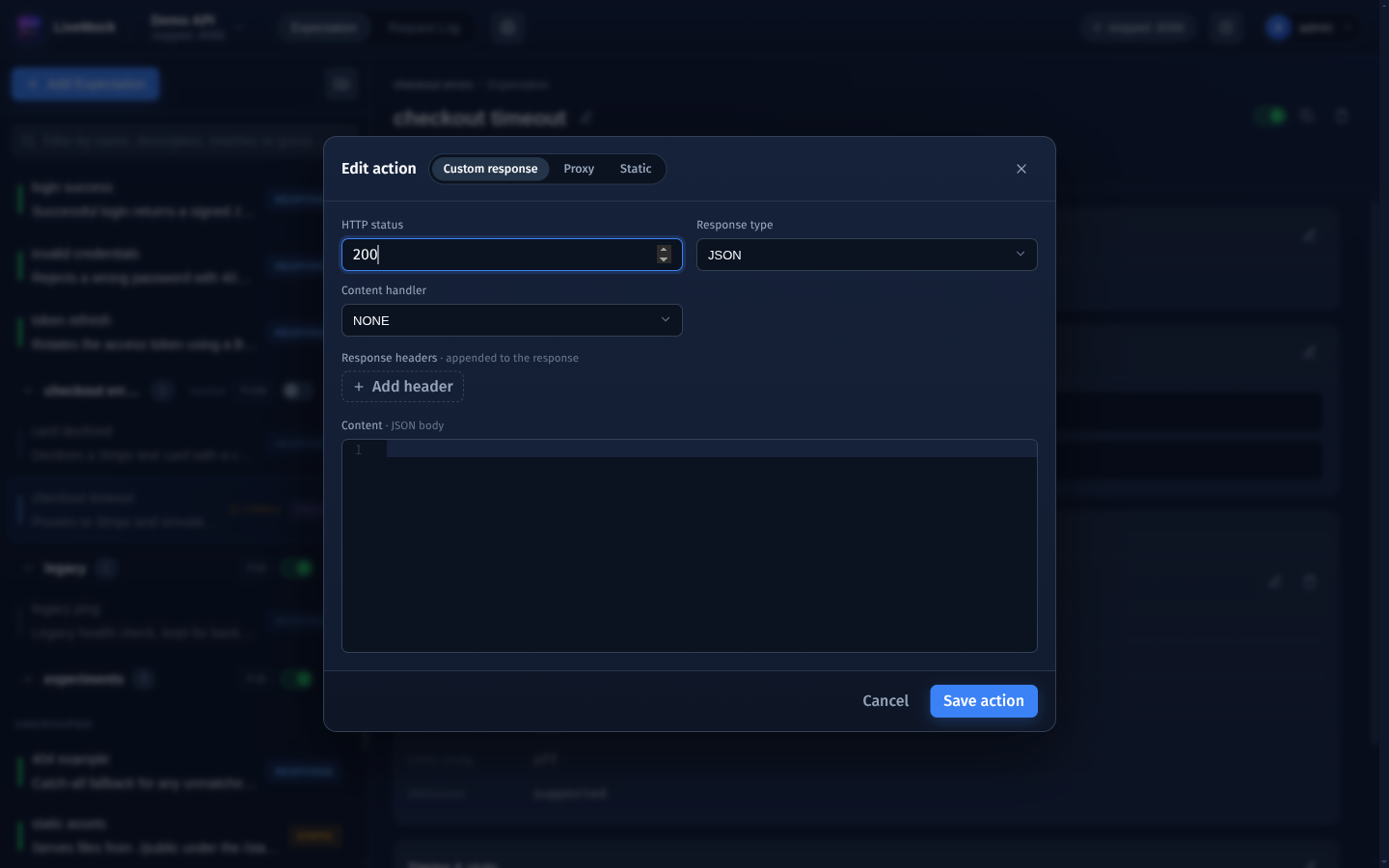
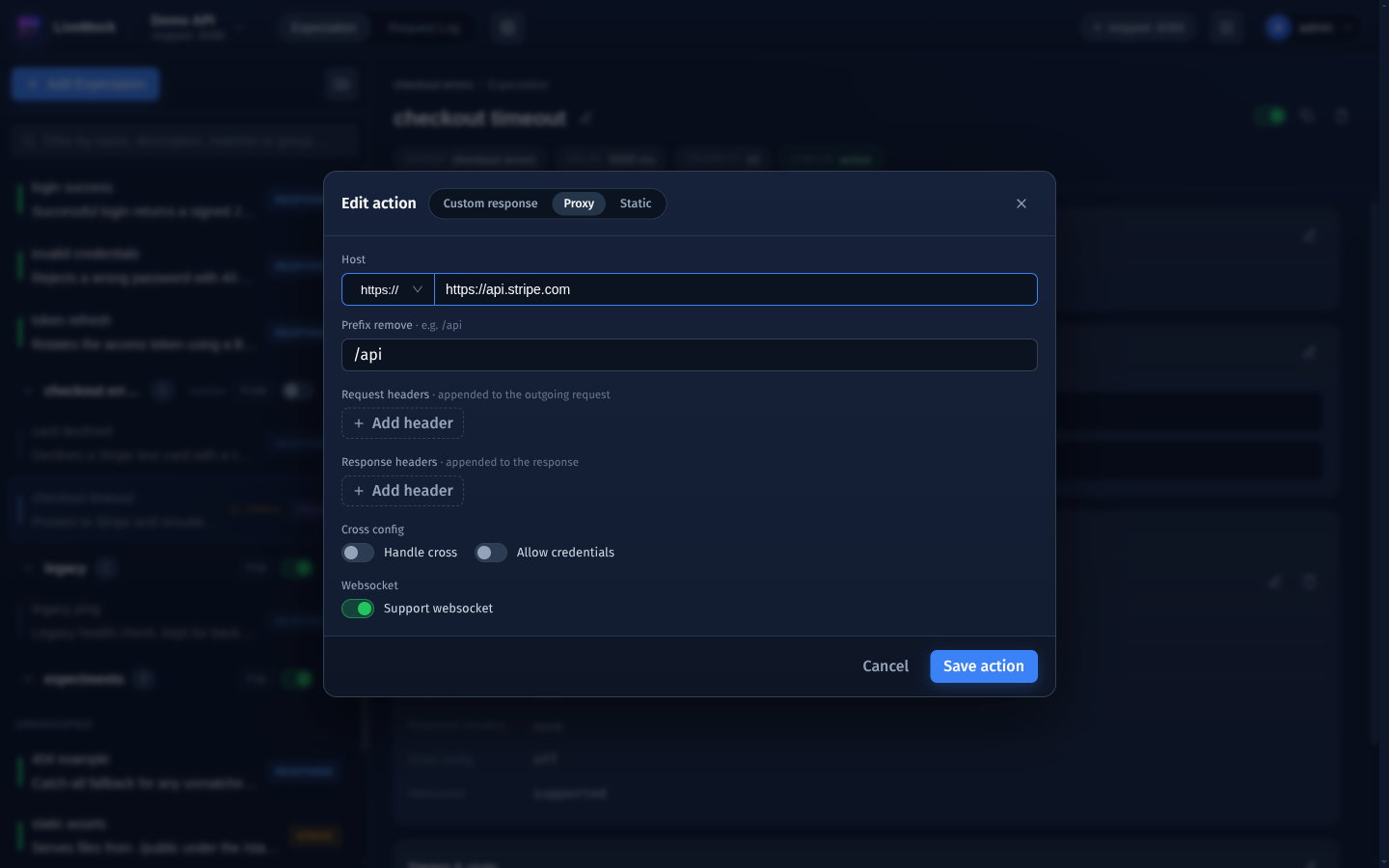
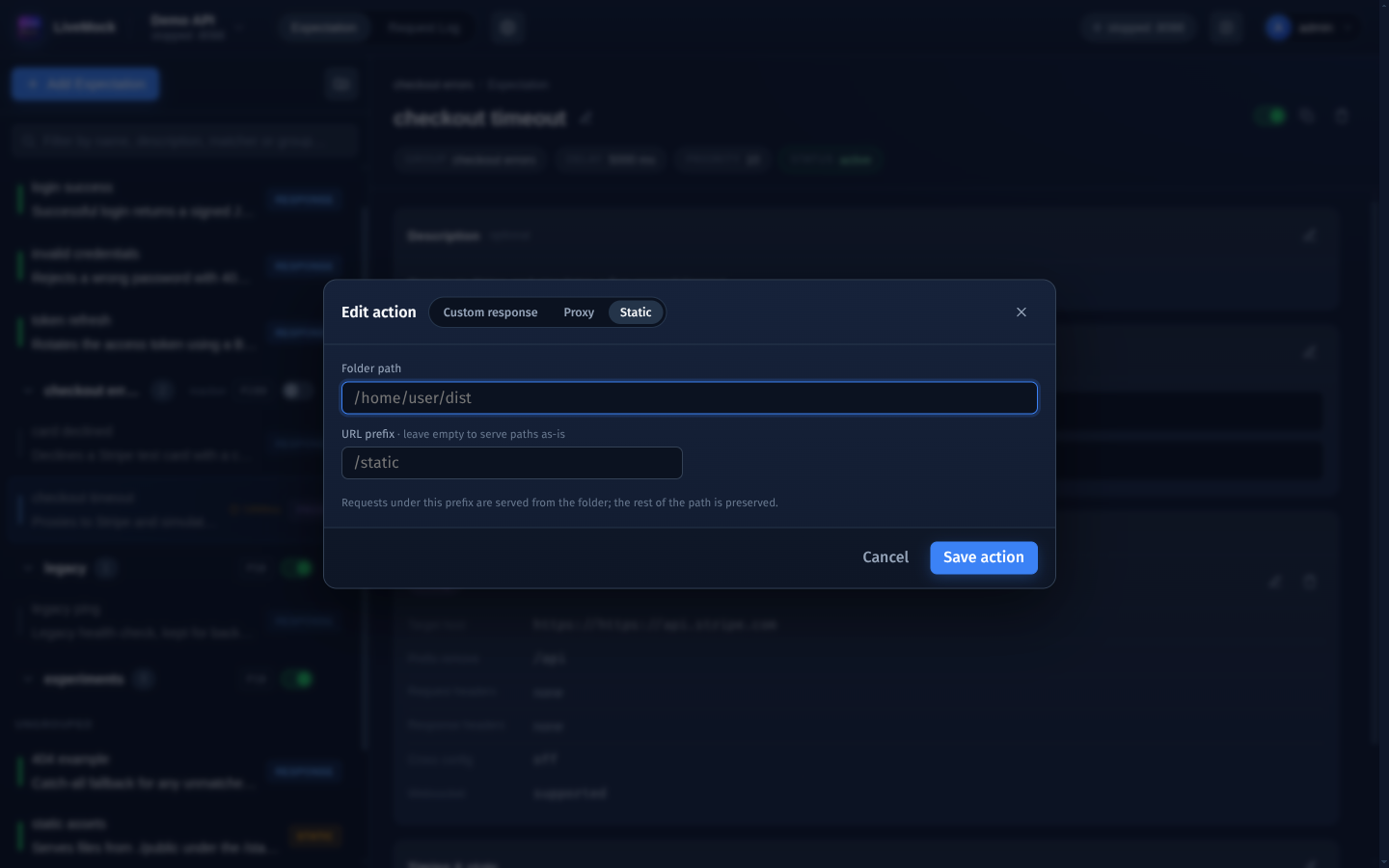
Click Create action on the Action card and choose the kind of action:
-
Custom response - return your own status code, headers and body. The body can be JSON, plain text, or a Mock.js template.
-
Proxy - forward the request to a real host.
-
Static - serve a folder from disk.
For the quick start, keep Custom response, status 200, and type a JSON body such as:
{
  "name": "John",
  "role": "admin"
}
Everything is saved as you go - there is no separate save step on the page itself.
6. Start the project
Click the green start button in the app bar. The status changes to running :8088. Now call the mock port:
curl http://localhost:8088/api/login -X POST
You get the JSON body back, and the request appears on the Request Log page.
- If the request is answered by a
404, check that the expectation is active (the toggle in its header) and that every matcher matches - a single failing matcher is enough to skip an expectation. - If several expectations could match, the first one in the match order wins. See Expectation groups.
Where to go next
- Matchers - all five matcher types and twelve comparators.
- Actions - custom response, proxy and static folder in detail.
- Groups and match order - control which expectation wins.
- Import OpenAPI / Postman - turn an API description into a full set of expectations.