Request Log
Every request that reaches a project's mock port is recorded: which expectation matched (if any), the request, the response and how long it took. The Request Log tab shows them live while the project is running.
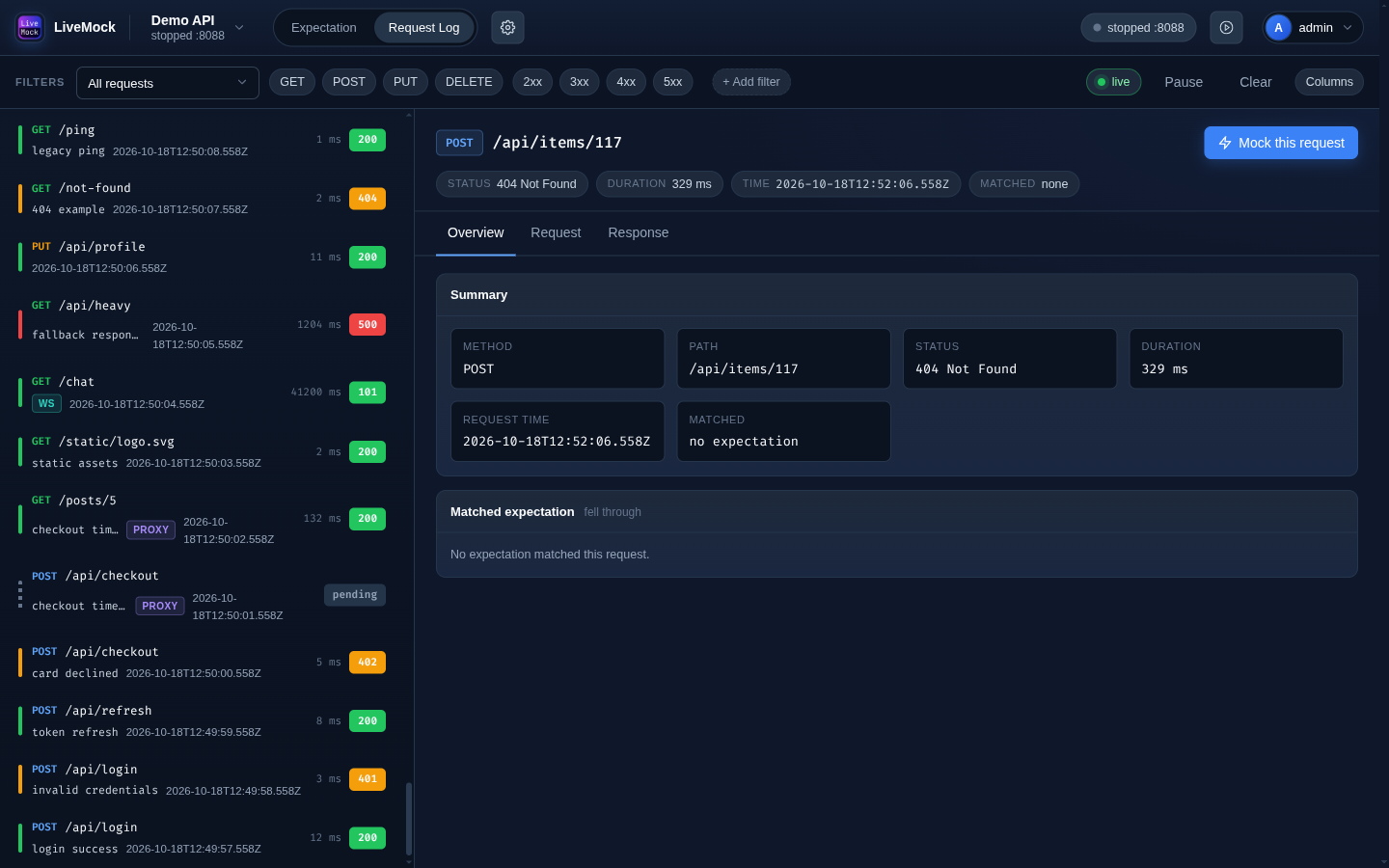
Layout
- Left - the list of captured requests, newest first. Each row shows the method, the path, the matched expectation,
the time, the duration and the status code. Proxy requests carry a
PROXYbadge, WebSocket sessions aWSbadge, and requests still waiting for an answer showpendinginstead of a status. - Right - the selected request, split into Overview, Request, Response and, for WebSocket sessions, Websocket.
Clicking a row loads it in the detail pane.
Overview
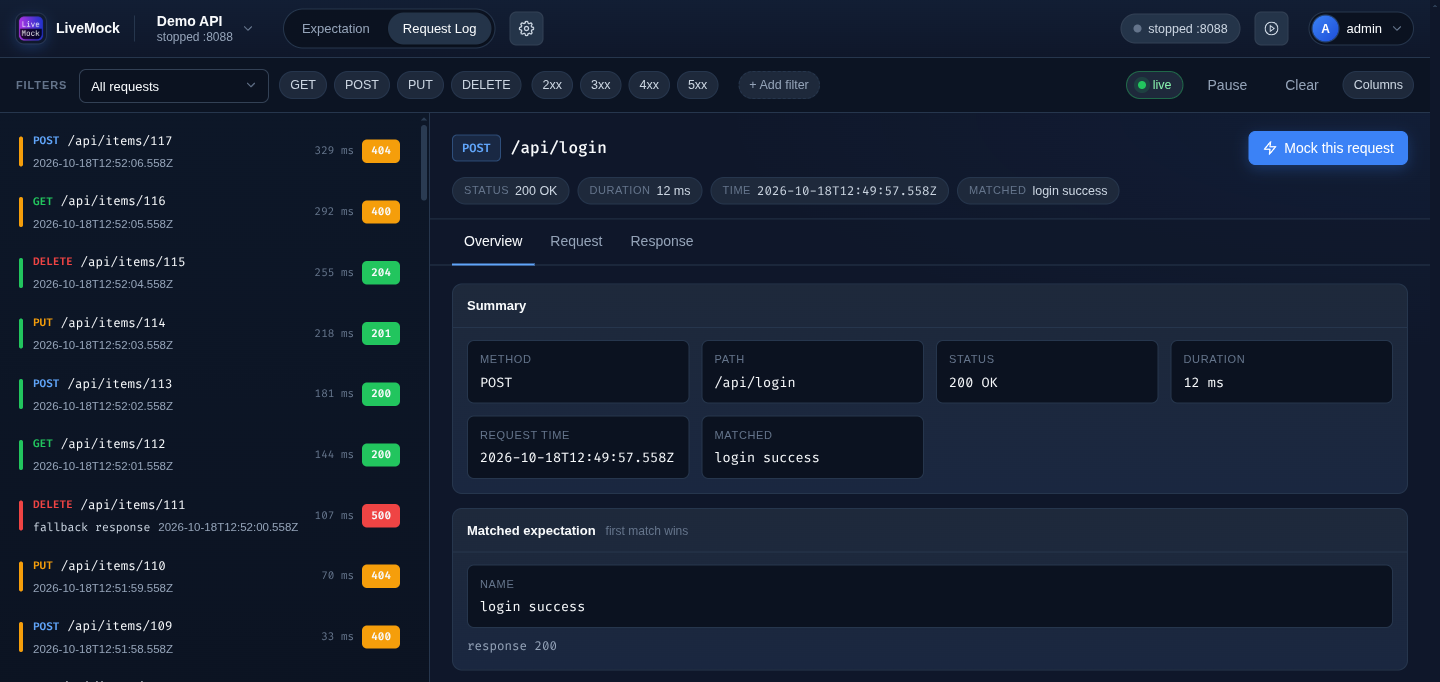
A summary of the request - method, path, status, duration and request time - followed by the matched expectation.
When nothing matched, the pane says so and the request fell through to the 404 fallback.
Request
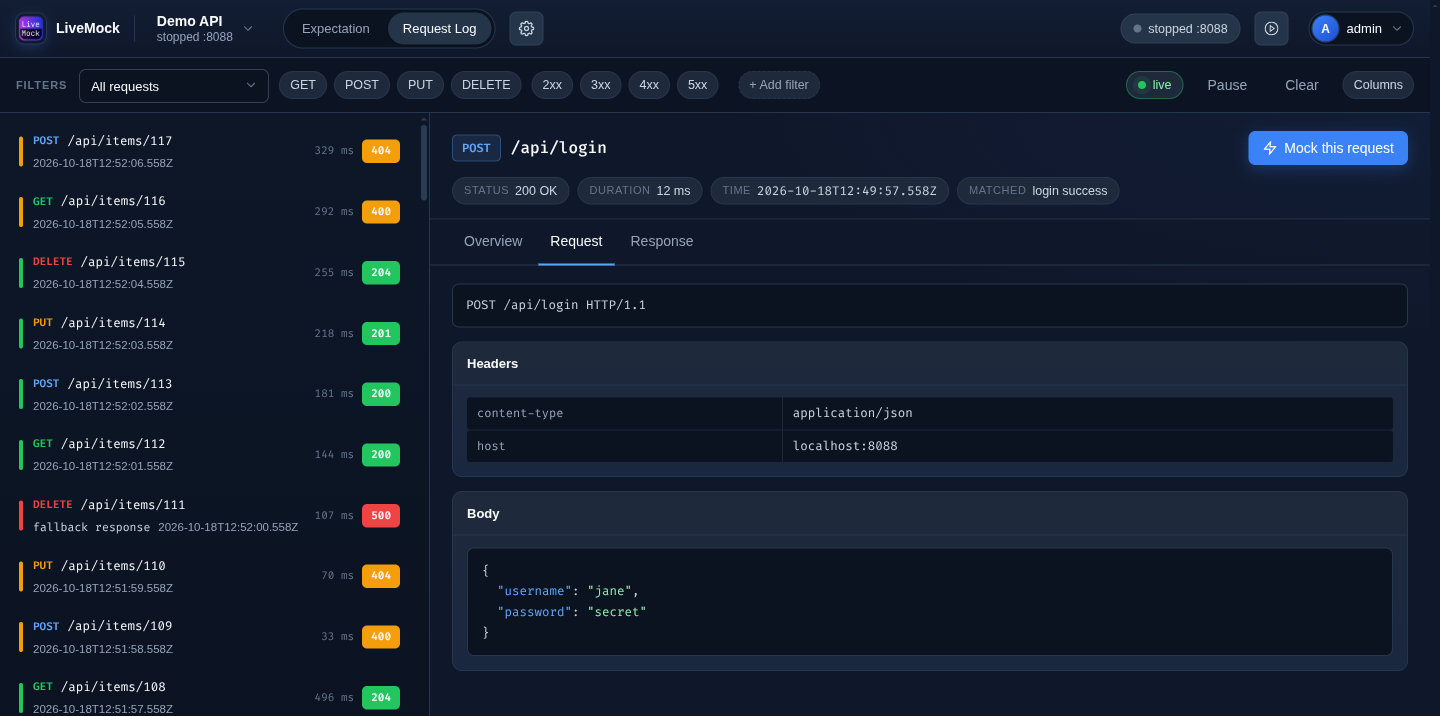
The request line, the request headers and the parsed body.
Response
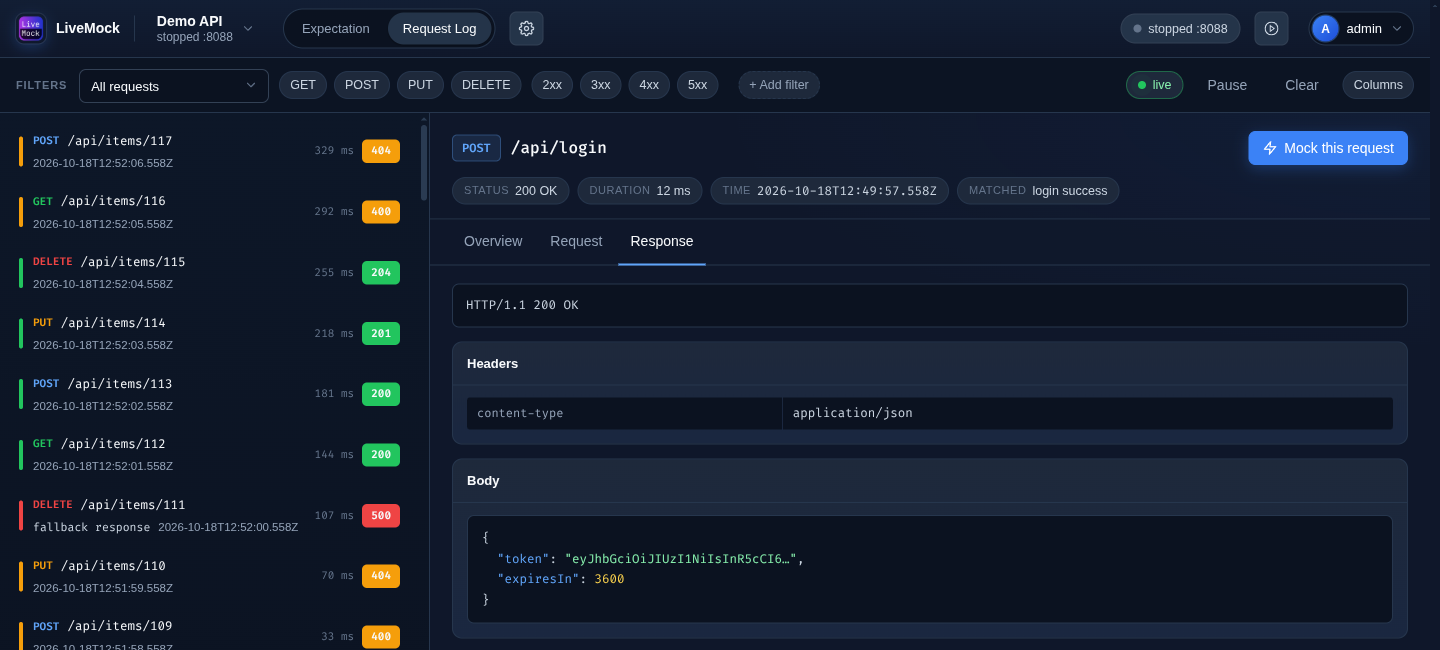
The status line, the response headers and the response body.
Websocket
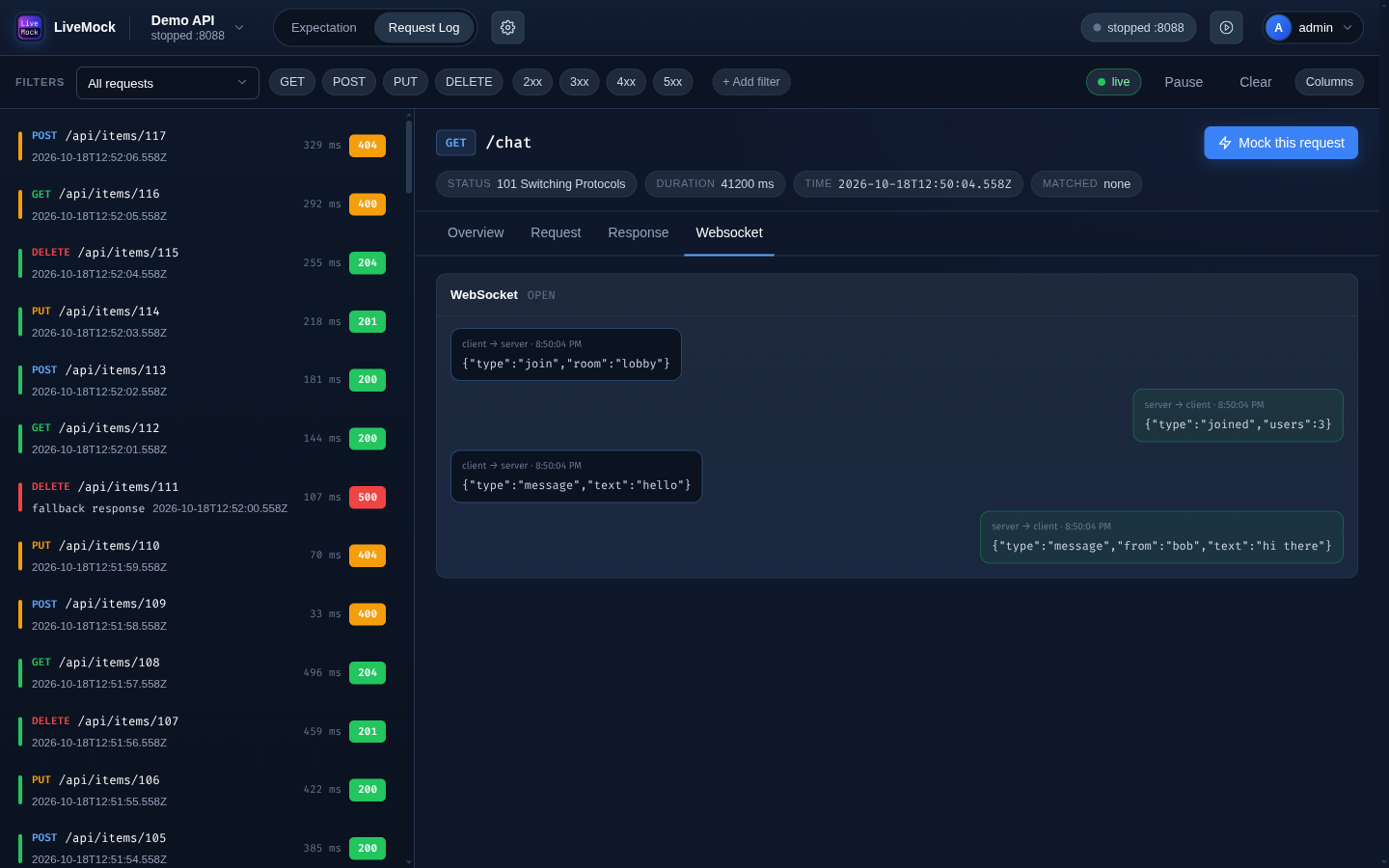
For proxied WebSocket connections, the messages exchanged in both directions, with their direction and send time. This is most useful when checking a socket protocol against a real backend while proxying.
Live mode and pausing
At the right of the filter bar:
- the live indicator means new requests are appended as they arrive;
- Pause freezes the list so you can read a request without the list moving; click Resume to continue;
- Clear deletes every request recorded for the current project (it asks for confirmation).
What is stored
Each record is one JSON object:
{
  "id": 100099,
  "expectationId": "c26a2cef-8ac7-4ce4-8a4b-595c850488be",
  "proxyInfo": {
    "isProxy": false,
    "proxyHost": null,
    "proxyPath": null,
    "requestHeaders": null,
    "responseHeaders": null
  },
  "req": {
    "method": "POST",
    "path": "/api/login",
    "query": {},
    "headers": {
      "host": "localhost:8088",
      "content-type": "application/json"
    },
    "body": { "username": "jane" },
    "rawBody": "{\"username\":\"jane\"}",
    "requestTime": 1691154891042,
    "requestTimeStr": "2023-08-04T13:14:51.042Z"
  },
  "res": {
    "status": 200,
    "statusMessage": "OK",
    "duration": 12,
    "headers": { "content-type": "application/json" },
    "body": { "token": "…" },
    "rawBody": "{\"token\":\"…\"}",
    "responseTime": 1691154891054,
    "responseTimeStr": "2023-08-04T13:14:51.054Z"
  },
  "websocketInfo": null
}
| Field | Meaning |
|---|---|
id | Sequence number of the request in the project. |
expectationId | The expectation that answered the request, or null when nothing matched. |
proxyInfo | For proxied requests: the target host and path, plus the headers sent to the target and received from it. |
req / res | The parsed body, the raw body, headers and timing. req.query holds the parsed query string. |
websocketInfo | For WebSocket sessions: the connection status and the messages exchanged. |
The custom filter below addresses fields of this object with JSON paths such as req.method or res.status. The id
of a request is also handy when reporting a problem.
Limits
A project keeps a bounded number of requests: Max request log in the project settings (default 5000, minimum 1000). Old entries are trimmed automatically, so a long-running project never grows without bound. The list loads older requests on demand while you scroll.
Turning a request into a mock
The Mock this request button in the top-right corner creates a new expectation from the selected request - see Mock this request.